A website concept for Kunsthal Aarhus, designed to extend the exhibition experience beyond the gallery through a digital archive focused on exploration, storytelling, and discovery.
Role
UX researcher / concept developer / UX/UI designer
Timeline

November '25 - January '26
Team
1 designer, collaborating with Kunsthal Aarhus
Contemporary exhibitions are temporary by nature. They open, create conversations, and eventually disappear to make room for something new.
For my bachelor thesis, I collaborated with Kunsthal Aarhus to explore how digital design could extend the value of exhibitions beyond their physical duration.
While exhibitions often leave a lasting impression on visitors, opportunities to revisit them are limited once they close. Documentation, photographs, and curatorial material continue to exist, but are often difficult to access or disconnected from the original experience.
The project explored how a digital platform could preserve these experiences, support curiosity, and create new ways of engaging with contemporary art before, during, and after a visit.
How might a digital archive become a natural extension of the exhibition experience rather than simply a record of it?
Kunsthal Aarhus already documents exhibitions extensively. The challenge was not about preserving information, but making it meaningful and accessible.
Many cultural institutions offer digital archives, yet these often function as repositories rather than experiences. They are useful for documentation, but less effective at encouraging exploration, reflection, or engagement.
The challenge became finding a way to transform existing archival material into something visitors would actively want to use.
To understand both visitor expectations and institutional goals, I conducted stakeholder interviews, surveys, focus groups, observations, competitor analysis, and usability research.
Several patterns emerged throughout the process.
Visitors often wanted to revisit exhibitions after they had ended, whether to remember a specific artwork, learn more about an artist, or continue exploring a topic that had sparked their interest.
At the same time, existing archive solutions were often difficult to navigate and relied heavily on users already knowing what they were looking for.

Insights
Perhaps the most important insight came from observing how people engage with cultural content. Rather than following a structured path, visitors tended to move between artworks, artists, stories, and themes based on curiosity.
This shifted my perspective on the archive entirely. Instead of designing for retrieval, I began designing for discovery.

User journey mapping
The research moved the project away from the idea of a traditional archive.
Rather than creating a system focused on storing information, I wanted to create a platform focused on exploration and engagement.
Four principles guided the concept:
. extend exhibitions rather than replace them
. support curiosity without requiring expertise
. connect physical and digital experiences
. prioritise accessibility and long-term relevance
This reframed the archive from a documentation tool into a continuation of the visitor journey.
The design process explored a range of concepts, from immersive exhibition recreations to alternative archive structures and interactive storytelling formats.
As the project evolved, research consistently pointed towards a simpler direction. Visitors valued context, flexibility, and ease of exploration more than technological novelty.
This led to a web-based platform centred around discovery rather than documentation.

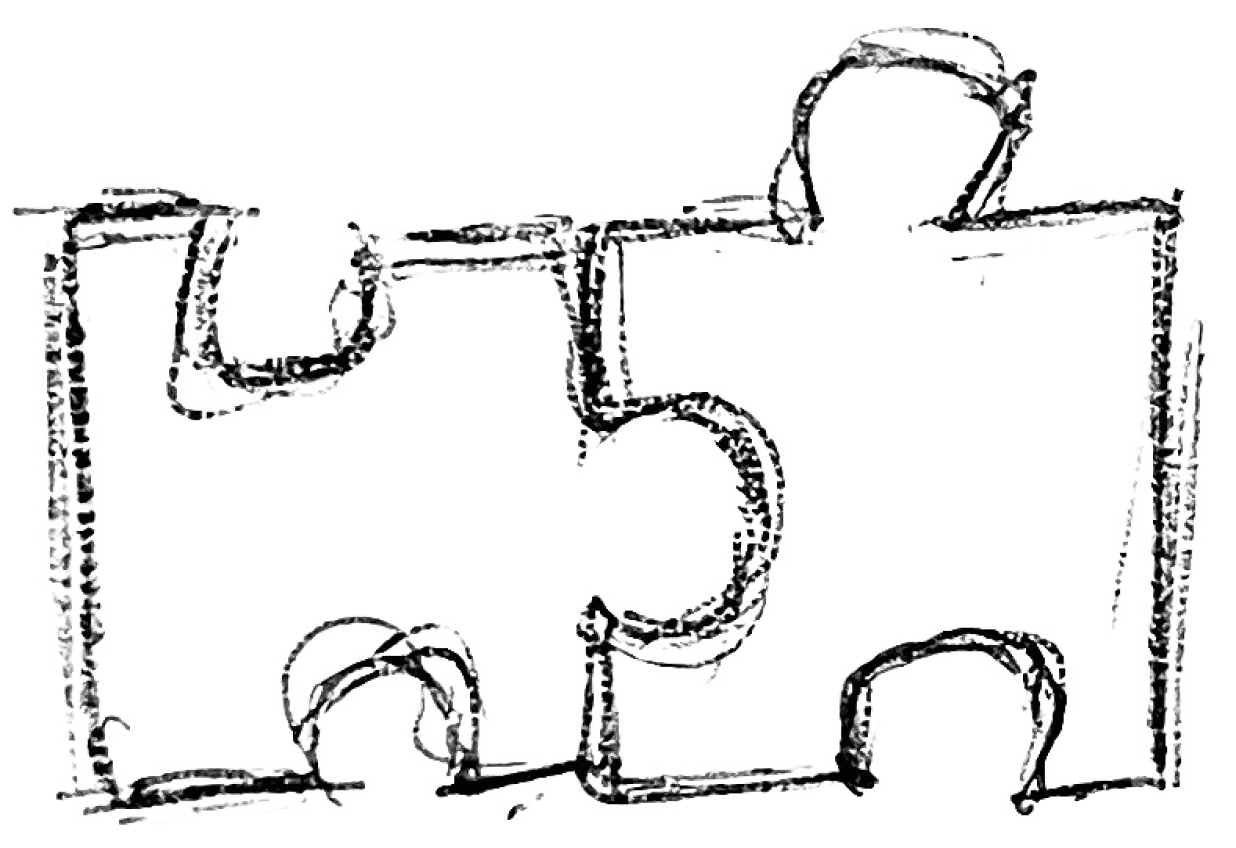
Sketching
Instead of organising content purely through dates and categories, the concept introduced multiple entry points into the archive through exhibitions, artworks, stories, and thematic connections.
Information architecture played a central role throughout the project. The challenge was not simply presenting content, but helping visitors navigate relationships between exhibitions, artworks, artists, and ideas in a way that felt natural and engaging.

Site map
The UI design follows an image-driven design approach, characterized by sharp edges, minimal ornamentation, and a muted colour palette. This was an intentional decision made to foreground artworks and exhibitions, allowing visual material to function as the focus point while text serves a supportive, contextual role.

Design system example

Design application: filters
The concept was refined through stakeholder feedback, usability testing, A/B testing, and heuristic evaluation.
Testing showed that participants quickly understood the value of revisiting exhibitions digitally and saw clear opportunities for using the platform before and after a visit.
The most valuable feedback focused on improving navigation, terminology, content hierarchy, and discoverability.

Feedback grid: improvements
These iterations helped create a clearer structure while ensuring the experience remained approachable for both casual visitors and more engaged users.

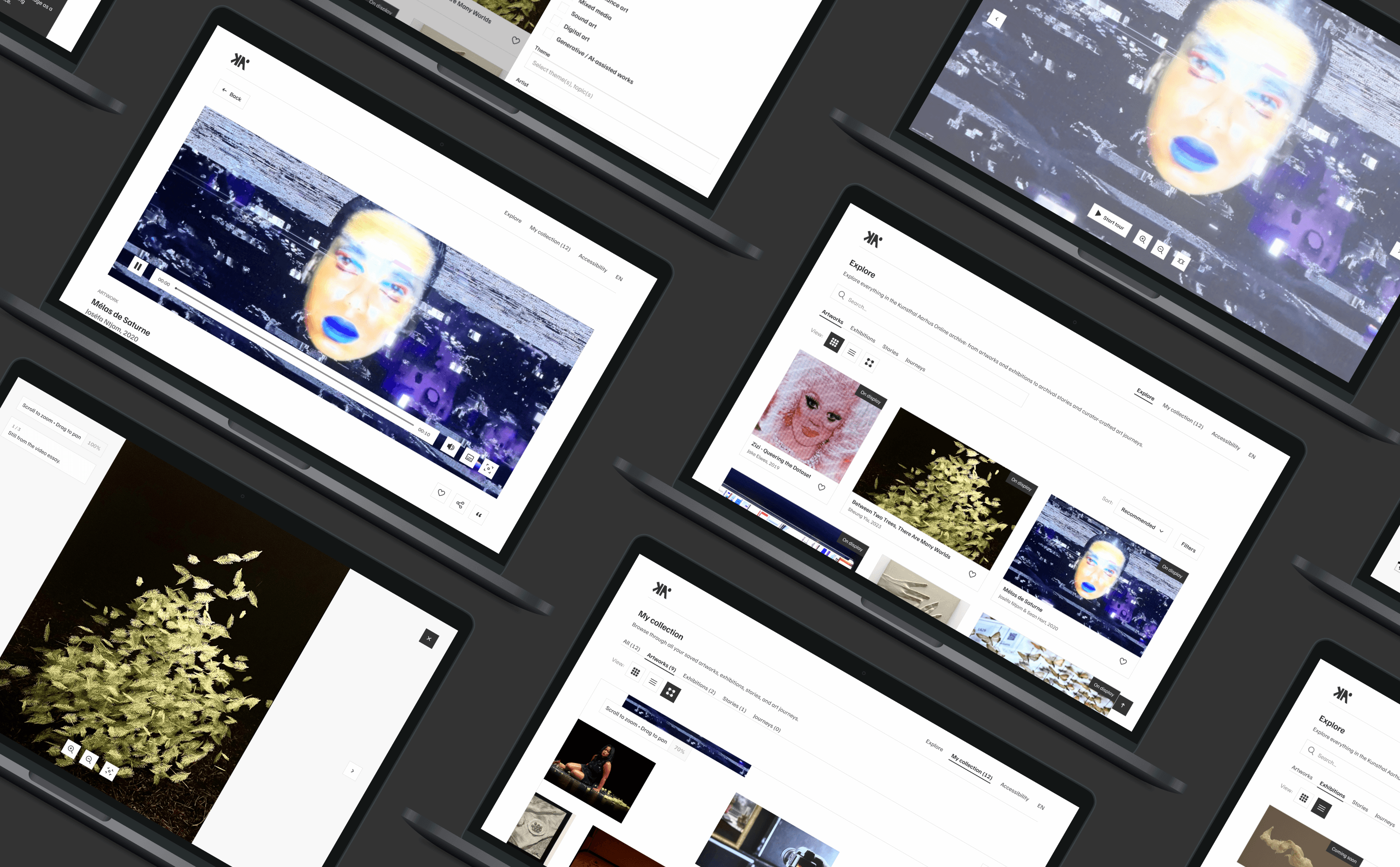
The final concept transforms Kunsthal Aarhus' archive from an internal documentation system into a public-facing cultural resource.
Rather than replication the museum online, KAo extends the exhibition experience beyond the gallery walls, supporting exploration, reflection, and continued engagement with contemporary art long after the exhibition closes.
Exhibitions

Current and past exhibitions remain accessible through a dedicated archive, allowing visitors to revisit experiences long after they have ended.
Artworks

Artworks are presented alongside supporting material, helping visitors explore pieces beyond what is possible during a physical visit.
Stories

Curatorial insights, narratives, and exhibition stories provide additional context and encourage deeper engagement with the content.
Journeys

Thematic pathways connect exhibitions, artworks, and ideas, creating opportunities for non-linear exploration inspired by how visitors naturally discover content.
Digital tours

Guided experiences allow visitors to prepare before a visit, revisit exhibitions afterwards, or explore content remotely.
The bridge

QR codes and interactive touchpoints create a seamless transition between the exhibition space and the online archive.
This project changed the way I think about digital experiences in cultural spaces.
What began as an archive quickly became a question of storytelling, accessibility, and how digital design can support experiences that are otherwise temporary.
One of the biggest lessons was recognising that meaningful experiences do not necessarily come from adding more technology. Throughout the project, research consistently reinforced the value of clarity, context, and thoughtful content over technological complexity.
Working with a real cultural institution also challenged me to balance visitor needs, organisational goals, content strategy, and long-term sustainability. It pushed me beyond interface design and encouraged a more strategic approach to experience design.
The project remains one of my most research-driven and conceptually ambitious pieces of work, and I hope to continue exploring its potential in future collaboration with Kunsthal Aarhus.